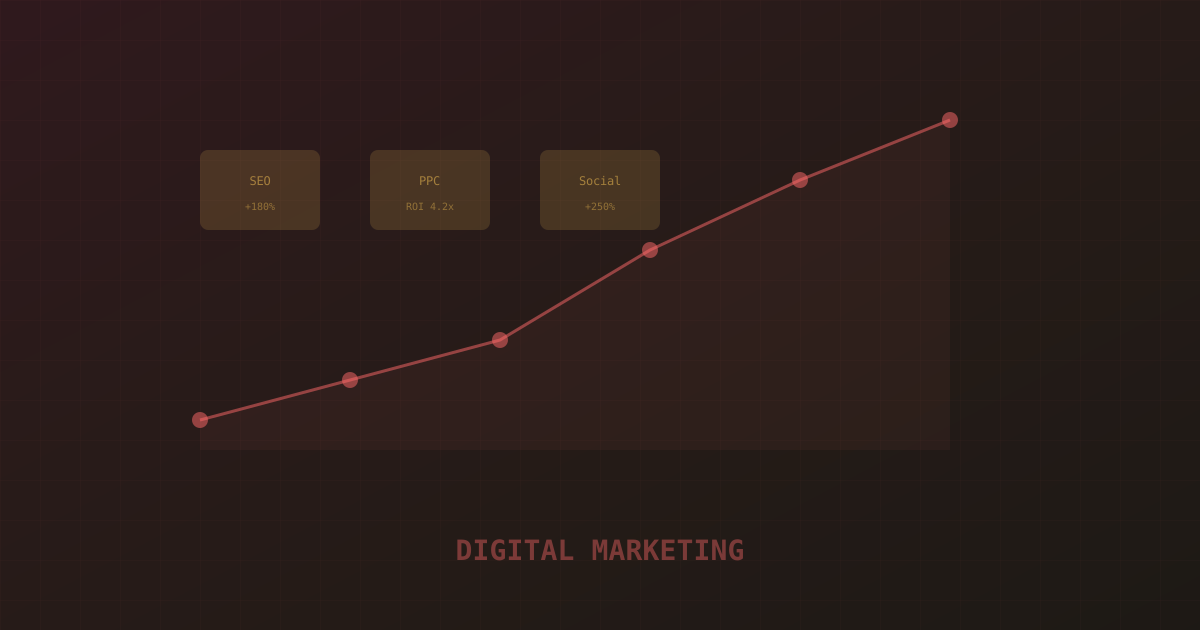
Digital marketing is no longer optional — it is the primary growth engine for businesses of every size. Yet most companies still struggle to connect their marketing spend to actual revenue. This guide breaks down the strategies that work, with specific metrics, tool recommendations, and frameworks you can apply immediately. We've seen this compounding effect firsthand — our NetFish case study shows how data-driven marketing decisions helped scale a fintech app to 2M+ downloads.
SEO Fundamentals That Still Work in 2023
Search engine optimization remains the highest-ROI channel for sustainable traffic. The fundamentals have not changed: crawlability, relevant content, technical health, and authoritative backlinks. What has changed is the sophistication of Google's algorithms — BERT, MUM, and the Helpful Content Update reward genuine expertise over keyword stuffing.
Start with a technical audit. Tools like Screaming Frog, Ahrefs Site Audit, or Google Search Console will surface crawl errors, broken links, duplicate content, and Core Web Vitals issues. Fix the technical foundation before investing in content — otherwise you are building on sand.
Keyword Research and Intent Mapping
Modern keyword research goes beyond search volume. Map every keyword to search intent: informational, navigational, commercial, or transactional. A keyword like "best CRM software" signals commercial intent — the searcher is comparing options. "How to set up Salesforce" is informational. Your content must match the intent or Google will not rank it.
Use Ahrefs, SEMrush, or Ubersuggest to build a keyword map. Group keywords into topic clusters — a pillar page covering the broad topic, supported by cluster pages targeting long-tail variations. This structure signals topical authority to search engines and improves internal linking.
Content Marketing: The Engine of Organic Growth
Content marketing is not just blogging. It includes whitepapers, case studies, video, podcasts, interactive tools, and original research. The key is consistency and quality. One authoritative 3,000-word guide will outperform ten thin 500-word posts.
Build a content calendar aligned with your buyer's journey. Top-of-funnel content addresses problems and educates. Middle-of-funnel content compares solutions and builds trust. Bottom-of-funnel content drives conversions with demos, pricing pages, and case studies. Measure each piece by its intended metric — traffic for TOFU, leads for MOFU, conversions for BOFU.
Repurpose aggressively. A single long-form article can become a Twitter thread, a LinkedIn post, an infographic, a short video, and an email newsletter. This multiplies your reach without multiplying your production cost.
PPC Advertising: Paying for Predictable Pipeline
Paid search and social advertising deliver immediate, measurable results. The key is tight targeting and continuous optimization. Start with Google Ads for demand capture — people actively searching for your solution. Then expand to Meta Ads, LinkedIn Ads, or TikTok Ads for demand generation.
Structure your campaigns around specific landing pages, not your homepage. Each ad group should target a narrow keyword theme with matched ad copy and a dedicated landing page. Quality Score in Google Ads directly affects your cost per click — higher relevance means lower costs.
Use negative keywords aggressively. Review your search term report weekly and exclude irrelevant queries. A B2B SaaS company might exclude "free," "jobs," "salary," and "tutorial" to avoid wasting budget on non-buyer traffic.
Likes and followers do not pay the bills. Focus on engagement rate, click-through rate, and conversion rate. Choose platforms based on where your audience spends time, not where your competitors are.
For B2B companies, LinkedIn is the primary channel. Share original insights, employee stories, and industry commentary. For B2C brands, especially e-commerce brands, Instagram and TikTok drive discovery while email and SMS drive retention. Build a community, not just a following — respond to comments, host live sessions, and create user-generated content campaigns.
Email Marketing: The Highest-ROI Channel
Email marketing consistently delivers $36-$42 in return for every $1 spent, according to DMA data. Yet most companies underinvest in their email program. Build segmented lists based on behavior, not just demographics. A welcome series for new subscribers, a re-engagement campaign for inactive users, and a post-purchase upsell sequence are the three most profitable automations you can set up.
Use tools like Mailchimp, Klaviyo, or HubSpot. Focus on deliverability — authenticate your domain with SPF, DKIM, and DMARC. Monitor your sender reputation and keep bounce rates below 2%.
Analytics and Measurement Framework
You cannot improve what you cannot measure. Set up Google Analytics 4 with proper conversion tracking. Define your key metrics: Customer Acquisition Cost (CAC), Customer Lifetime Value (CLV), Marketing Qualified Leads (MQLs), and pipeline velocity. If you need this built out properly, our data analytics and BI team can set up dashboards tied directly to revenue.
Calculating Marketing ROI
Marketing ROI = (Revenue Attributable to Marketing - Marketing Cost) / Marketing Cost x 100. Use attribution models to assign revenue to specific channels. GA4 offers data-driven attribution, which is more accurate than the old last-click model. Track the full funnel — from first touch to closed deal — to understand which channels drive awareness versus which drive conversion.
Review your marketing dashboard weekly. Identify underperforming campaigns and reallocate budget to what works. The companies that grow fastest are not the ones with the biggest budgets — they are the ones that measure rigorously and iterate quickly.